It’s on the Rise – What You Should Know
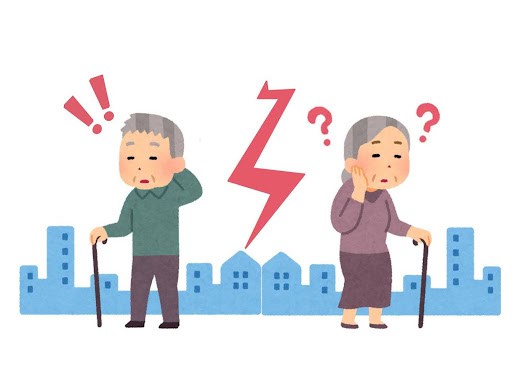
A “grey divorce” refers to the dissolution of a marriage among older adults, typically those over the age of fifty. Regardless of the parties’ age at the time of separation, the breakdown of a marriage is never easy; however, couples over the age of fifty face a unique set of challenges when separating.
In the last few decades, there has been a steady rise in the average age of divorce in Canada. According to data released by Statistics Canada, even though the average length of marriage did not change significantly between 1970 and 2020, the average age at divorce in 1970 was 38 years while the average age at divorce by 2020 was 46 years. Another chart released by Statistics Canada revealed that over the last thirty years, age-specific divorce rates have fallen for young adults (35 to 49 years old age group), but have risen slightly for older adults (50 to 64 years old age group).
So, what could be the reasons behind the increasing number of grey divorces? There is no one-size-fits-all answer to this; however, the following is a non-exhaustive list of factors that may lead to a grey divorce:
- Empty nest syndrome: As the children grow older and leave the family home, some parents experience grief and loneliness. This can be especially hard for a stay-at-home parent whose life revolves around caring for the children. Although there is no specific data in Canada regarding the correlation between empty nest syndrome and marriage breakdown, the rise of grey divorces in Canada is often associated with this condition.
- Age at marriage: Again, accordingly to Statistic’s Canada data, about three decades ago, the average age at marriage was about 25 years and the average age at divorce was 38 years. As of 2020, the average age at marriage increased to 30 years and the average age at divorce was 46 years. These numbers are only expected to go higher with the upcoming generations focusing more on financial independence before considering marriage, and the inability to buy a property in the current market.
- Changing mindset: Society’s attitude toward divorce has shifted in general, and the negative connotations around divorce have diminished. Women have become more educated and financially independent and are less likely to stay in marriages that do not meet their needs, even if it means ending the relationship after spending decades together.
- Life expectancy: Research shows that life expectancy has increased globally. People are more likely to reconsider their life choices when they realize that they have a limited number of years left, and this may involve their choice of their life partner. Once a 65-year-old client told me that she was “done being married”. She said, “We had a good marriage and a good life together, but I am 65 years old, and with my health challenges I do not expect to live over 70 years. The children have their own lives, and my spouse is a workaholic. I want to live my life, have fun, and do things that make me happy, I cannot wait for him forever.”
These reasons may or may not resonate with you, however, if you are over fifty and have decided to end your marriage or a long-term common-law relationship, the following key considerations will help you navigate through these challenging times.
- Legal Process
- Grey divorces follow the same steps as any other divorce in Ontario. A family law matter may involve uncontested divorce or a divorce with claims for corollary relief. Claims for corollary relief include claims in relation to parenting, support and the division of property, as well as other claims naturally arising on the breakdown of a marriage. Grey divorces generally do not involve children, eliminating parenting related claims, so there may be more limited issues to be addressed, such as support and property division. Still this process can be emotionally and financially draining. It is always a good idea to consult with a family law lawyer to understand your rights and obligations. Having a lawyer involved may also help in setting realistic expectations.
- In Canada, divorce is governed by the Divorce Act, and can be obtained on the following grounds under section 8(2):
- Separation for at least one year: The parties must be separated for at least one year, before applying for divorce. It is important to note that you and your spouse can live separate and apart under the same roof.
- Adultery: If one spouse has committed adultery, the other spouse can file for divorce without waiting for a one-year separation period. Unless the adultery is admitted, evidence of adultery must be provided.
- Cruelty: If one spouse has treated the other spouse with physical or mental cruelty to the extent that it makes it unreasonable to continue living together, this can be grounds for divorce without the one-year separation requirement. The threshold for this ground for divorce is very high.
1.1 Date of Separation:
In long marriages, sometimes couples separate and then get back together and then separate again. Or they start using separate bedrooms. It is important to determine when the relationship ended beyond the scope of reconciliation. If there are disputed dates of separation, or more than one date of separation, a Court will consider the following factors:
- Did one party clearly express their intention to separate, even if the other party was in denial, through written communication such as text messages or emails?
- When did the parties begin to present themselves as no longer being together to family, friends, and others?
- When did the parties start separating their finances?
- When did the parties begin sleeping in separate bedrooms or stop having sexual relations?
- When did the parties stop sharing meals or attending social events together?
- When did the parties begin dividing childcare responsibilities or start caring for the children separately?
This is not an exhaustive list but captures some of the Court’s critical considerations.
- Property Division
- In Ontario, property division is governed by the Family Law Act, which dictates that any assets and debts accumulated during the marriage are divided equally, subject to some identified exclusions and deductions.
- This includes real estate, vehicles, savings, pensions, investments, and other assets. For older couples, pensions and retirement savings are often among the most significant assets.
- The division of property can be convoluted, especially when a couple is approaching retirement or is already retired. The timing of the divorce can also affect the division of pensions, RRSPs, and other retirement savings.
- Division of the matrimonial home can also be challenging. In the post-pandemic real estate market, property prices have increased exponentially. For couples approaching retirement or already retired, it is nearly impossible to qualify for a mortgage, unless their current home has substantial equity, and they have the option of splitting the equity and downsizing. Otherwise, buying out the interests of one spouse or selling the home and splitting the equity may not result in one or either party having sufficient funds to buy another home or pay for their expenses for the spend the rest of their lives.
- Sometimes parties to a grey divorce have been previously married and have existing legal obligations to a previous spouse. This must be factored into their resolution.
- Sometimes parties to a grey divorce bring substantial assets into a second marriage. Generally speaking, the value of assets that are brought into the marriage is not shared, at law, on the parties’ separation. A limited asset holding spouse may be surprised to learn that they will not share in substantial pre-marriage wealth.
- Sometimes a party to a grey divorce will invite the other into a home owned by that party on the date of marriage, and the parties will make this their family home. Older parties may have amassed a good deal of equity in such a property. While, generally speaking, the value of assets brought into the marriage are not shared, this is, typically, not true of a home that is ordinarily occupied by the parties as the family home (and meets the test to become a “matrimonial home”). Therefore, the home owing spouse may be surprised to see the substantial value of their pre-marriage equity shared.
- Spousal Support
- Definition – The Department of Justice Canada defines spousal support as “the money that one spouse may have to pay to the other spouse for their financial support following a separation or divorce. It is sometimes called “alimony” or “maintenance.” Spousal support is usually paid on a monthly basis, but it can be paid as a lump sum.”
- Spousal Support Advisory Guidelines – The Spousal Support Advisory Guidelines (SSAG) are non-binding guidelines used in Canada to help determine the amount and duration of spousal support. They offer a framework for calculating support based on various factors.
- Factors to be Considered – The quantum and duration of Spousal Support will be significantly affected by the length of the marriage and the financial needs, means and circumstances of both parties, including such factors as the income differences between spouses, the presence of children and the roles adopted by the parties during the marriage.
- Duration of Support:
- For grey divorces, spousal support may become a significant concern, especially when the parties are over or close to the retirement age, or when they are already retired and living on a fixed income.
- Grey divorces may involve relationships of significant duration, thereby increasing the likelihood of longer term, or even indefinite, spousal support.
- Additionally, under the SSAG, when the length of the marriage exceeds five years, and the age of the support recipient plus the duration of the marriage exceeds 65 years, the duration of spousal support becomes indefinite. This is called the Rule of 65. While, as the name suggests, the SSAGs are “advisory” and not binding, the Courts have discretion to follow or deviate from the Guidelines, on a case-to-case basis.
- From the perspective of the support recipient, a 30-year-old support recipient would generally be expected to achieve self-sufficiency, except in case of a disability. However, the same cannot be expected from a 60-year-old support recipient who has never worked or a 65-year-old recipient who has retired with limited income.
- From the perspective of a support payor, while a 30-year-old support payor would generally be expected to work and maximize his/her income; at the age of 65, a support payor might be found to be entitled to retire and might not be expected to work indefinitely, even if his/her obligation to support a former spouse was characterized as indefinite in the first instance.
- Amount of Support – When considering the amount of spousal support to be paid in grey divorces, relationships of extended duration, with parties of greater years, incline a Court to seek to try to equalize the parties’ net disposable incomes, by way of support.
- Complexity Requires Advice – It is imperative that you consult with a family law lawyer to know your rights and obligations. As a support recipient, you must not shortchange yourself or deprive yourself of your entitlement. Once you sign a domestic contract without legal advice or accept support below your entitlement, it can be extremely challenging, and financially daunting, to change spousal support later on.
- Retirement Considerations
- Many Canadians have concerns about their retirement plans, and these anxieties are amplified by divorce. The division of assets and pensions, once intended to fund a shared retirement, may now be expected to support two separate households.
- Divorce during retirement or the years leading up to it often brings complicated financial issues, as both spouses may have limited time to rebuild their wealth or plan their future.
- One must consider how any pensions, investments, and retirement savings will be equalized and how each party will support themselves moving forward. This consideration may be more daunting if there is a significant income disparity between the parties.
- Tax Implications
There are potential tax consequences when dividing retirement accounts, investments, and pensions. For instance, transferring funds between spouses may be subject to tax if it is not done correctly. It is crucial to consult with a family law lawyer and a financial advisor/accountant to ensure that your property division and/or support arrangement do not result in unintended tax consequences.
- Estate Planning
As we mature, we must ensure that we plan for our inevitable passing, as well as any possible separation or divorce.
The Ontario Family Law Act governs the sharing of property between married spouses in the event of a separation. It can also come in to play on the passing of a spouse. It is important to know that, on the passing of a spouse, the surviving spouse can elect to receive his or her entitlement to property sharing identified under the Ontario Family Law Act, instead of any provision made for him or her under the deceased spouse’s Will or under laws that govern division of property where a Will is not in place. Older spouses should be particularly alert to this possible outcome.
After a divorce, it is crucial to update your will, powers of attorney for property and personal care, and beneficiary designations, particularly if you had previously listed your spouse as the primary beneficiary or your attorney for property and/or personal care.
- Emotional Impact
- Grey divorces may lead to isolation and loneliness and therefore it is imperative that the parties build a support system for themselves consisting of their friends, family, and professionals qualified to provide psychological assistance in accordance with each party’s needs.
- Grey divorces can be emotionally challenging, not only for the separating couple, but also for their children and grandchildren if they feel the need to choose between one of the parents or act as a mediator. The added responsibility of caring for their elderly parents can also strain their personal lives, and social gatherings may become awkward with both parents present.
- Further, if a spouse to a grey divorce is on their second or third marriage, children of an earlier marriage may feel greatly threatened by the claims that the new spouse may have to the income and assets of their parent. In these circumstances, the children sometimes prompt their parent to consider some form of marriage contract, to ensure that the children’s inheritances are not adversely affected. The spouse to a grey divorce must separate his/her wishes around allocation of his/her income and assets from those of his/her children.
- Cognitive and Mental Health Capacity
With age, some people may experience memory loss, declined cognitive abilities, difficulty understanding complex legal and financial issues, the inability to appreciate the nature and consequences of legal separation and signing domestic contracts, and other mental health issues. Negotiating an enforceable settlement with a person who lacks capacity can be extremely difficult and expensive.
What should you do if your spouse lacks capacity? An experienced family law lawyer can help you navigate a settlement with a person with capacity issues. In these circumstances, both parties need to be represented by lawyers, who may also involve other experts such as qualified capacity assessors.
- Alternative Dispute Resolution vs. Court
If you:
- do not have an ongoing source of income and your assets and resources are limited,
- or you simply seek a more amicable and cost-efficient method of resolving your divorce concerns,
it is highly recommended that you exhaust all mutually agreeable alternate dispute resolution methods before considering litigation. Good alternative dispute resolution options include counsel negotiation, mediation, and collaborative practice.
If you are navigating a grey divorce in Ontario, it may be useful to consult with a family lawyer who has great experience with these types of cases. At Bair Family Law, our focus is on solutions, healing and restoration for our clients. We can help with the division of assets, spousal support, and any other matters related to divorce, under the laws of Ontario, and we are skilled a recognizing and addressing the needs of our clients of mature years.

Surabhi Pathak
Associate Lawyer
Surabhi Pathak, a family lawyer at Bair Family Law, focuses on making complex family law dynamics uncomplicated, and transforming challenges into rewarding solutions. She attentively listens to her clients’ needs, devising solutions with them and not for them. The key to her success is guiding clients to options for resolution that suit their individual circumstances. Whether serving as a powerful advocate in the Court context or skillfully advancing low conflict approaches to settlement, she believes in coaching her clients and helping them to make informed decisions for successful, long-term outcomes. Her commitment to this approach allows her clients to achieve high satisfaction, efficient and amicable resolutions to their family law concerns. Read More…

The information contained in this blog is provided solely for general interest; may not reflect current legal developments and should not be relied upon or construed as legal advice. Online readers should not act upon any information in this blog without first seeking professional advice. The sending or receipt of this information does not create a solicitor-client relationship between the reader and the content creator. For specific, comprehensive and up-to-date information, or for help with a particular factual situation, you should seek the advice of a family law lawyer.